Pet Food Industry White Paper
The Pet Food Institute (PFI) serves as a united voice of the pet food industry, coming together as one advocate for its members’ interests, and sharing best practices and collaboration to ensure that the quality, safety and nutritional adequacy of the pet foods manufactured & sold across the United States are of the highest standards.
Pet Food Institute Nutrition Subcommittee (PFI-NSC) Working Group Contributing Authors:
Renan Donadelli (Freshpet), Brenda Knapp (Simmons Pet Food), Leah Lambrakis (Simmons Pet Food), Matthew Panasevich (Mars Pet Care), Christine Pendlebury (Champion Pet Foods), James Templeman (Primal Pet Foods).
Introduction – What is Changing on Pet Food Labels
Over the next few years, the North American pet food industry is rolling out a modernized nutrition facts label across all pet food products to drive consumer transparency and understanding. Complete, industry wide implementation of the modernized nutrition facts label is expected by 2030, but consumers should expect to see early examples of these updated labels on pet food products as early as spring 2025. The goal of this label modernization is standardization across all North American pet food products and to more closely align with human food labeling. The updated nutrition label is designed for clarity and to be more informative, making it easier for pet owners and veterinary professionals to review and understand the most relevant nutritional content of pet foods. One of the most impactful updates to the nutrition facts label is the shift from crude fiber to total dietary fiber (TDF) maximum percentage within the product guaranteed analysis, thereby providing a more accurate and meaningful measure of a pets’ dietary fiber intake. A dietary fiber (max) will now appear below the newly defined total carbohydrate (max) as a hanging indent on a pet food nutrition facts label.
It is important to understand that while the total dietary fiber content is now declared, the actual amount of fiber in pet food has not changed. Previously, fiber was declared as a fraction of the total fiber content (as ‘crude fiber’); now, it is presented in its entirety (as ‘total dietary fiber’).

Figure 1. A comparison of the current Guaranteed Analysis panel with the proposed Pet Nutrition Facts label, highlighting the transition to total dietary fiber and the inclusion of calorie content and carbohydrate values.
What is Fiber?
Fiber is a class of carbohydrates that cannot be digested by pets. It is commonly classified into two main categories (1) soluble fiber and (2) insoluble fiber. Soluble fibers dissolve in water and are often fermented by bacteria in the large intestine. Insoluble fibers, on the other hand, do not dissolve in water and generally pass through the digestive system with minimal fermentation.
What is Crude Fiber vs. Total Dietary Fiber?
To summarize, while crude fiber has traditionally been used to declare the fiber content in pet food, it primarily accounts for only insoluble fibers, omitting important soluble fibers. Total dietary fiber includes both soluble and insoluble fibers, providing a more comprehensive and accurate representation of the fiber sources included in pet food. Therefore, consumers may see a higher value for fiber on their pet food label. This update to pet food labels enhances the nutritional information available to consumers.

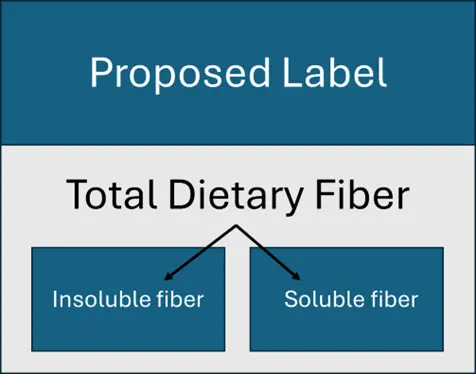
Figure 2. Crude fiber captures only a limited subset of insoluble fiber, whereas total dietary fiber encompasses the full range of both soluble and insoluble fiber components.
Why This Matters to Pet Owners
Although fiber is not defined as an essential nutrient for dogs and cats, it supports a multitude of associated benefits for pets including hairball control, improved stool quality and bowel movement regularity, enhanced gut health, and the promotion of satiety and weight maintenance. Given the wide breadth of roles that fiber plays and the varying needs of different dogs and cats, it is important to understand that the fiber content (e.g., low, modest, high) and composition (e.g., soluble vs insoluble) in different diets may vary greatly. A diet formulated for weight maintenance, for instance, may have much more fiber than a gastrointestinal therapeutic diet. As such, this label update is a meaningful step forward in helping pet owners make informed decisions regarding whether a diet may be appropriate for their pet.
Key Takeaways
The shift from crude fiber to total dietary fiber on pet food labels marks an important evolution in how nutritional information is communicated to pet owners. By adopting more comprehensive, scientifically aligned methods of fiber analysis and presenting this information in a clearer, more recognizable format on pet food labels, the pet food industry is taking a proactive step toward greater transparency, improved consumer understanding, and enhanced nutritional support for pets. As this transition unfolds, pet owners, veterinarians, and industry stakeholders alike can feel confident that the updated labels provide a more accurate and complete picture of fiber content—reinforcing the industry’s ongoing commitment to pet health and wellness.